UIXPulse Creative Agency

Can design deceive the user?

User experience (UX) design is no longer just about beauty, speed, or simplicity; it has become one of the most powerful tools for influencing user decisions. Every click, scroll, and button can shape a user’s mental path.

But the important question is:
👉 Is this influence always honest and ethical? Or does the design sometimes deceive the user?

In this article from Uixpulse, we explore one of the hottest trends in the world of digital design: Dark UX vs. Ethical UX.
What is Dark UX? (Dark Patterns in simple terms)

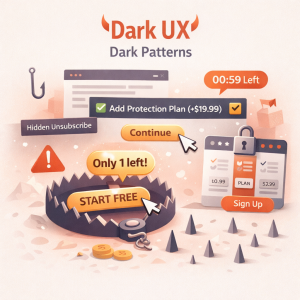
Dark UX or Dark Patterns are design patterns that use psychological techniques to trick the user into taking an action that is not necessarily in their best interest.

These patterns are usually implemented in a hidden and clever way, so that the user does not notice the deception; but a feeling of dissatisfaction remains in their mind.

The most common examples of Dark UX:

  • Hiding the “Unsubscribe” button
  • Defaulting paid options to be enabled
  • Creating a false sense of urgency (“Only 1 left!”)
  • Misleading plan comparisons
  • Forcing sign-up for easy access

📌 These patterns may increase click-through rates or sales in the short term, but in the long term, they destroy the trust of the client.

What is Ethical UX? User Experience Based on Trust

At the opposite end is Ethical UX.
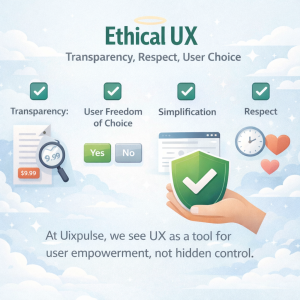
An approach that focuses on transparency, respect, and user choice rather than deception.

Core Principles of Ethical UX:

  • Transparency in Information and Pricing
  • Real Freedom of Choice for the User
  • Simplification Without Hiding
  • Respect for the User’s Time, Attention, and Data

At Uixpulse, we see UX as a tool for user empowerment, not hidden control.

Negative effects of Dark UX on brand and business

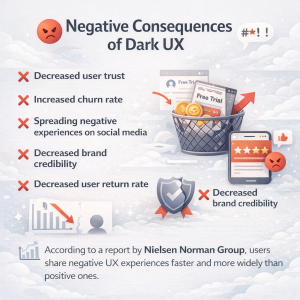
Negative consequences of Dark UX:

❌ Decreased user trust
❌ Increased churn rate
❌ Spreading negative experiences on social media
❌ Decreased brand credibility
❌ Decreased user return rate

📊 According to a report by Nielsen Norman Group, users share negative UX experiences faster and more widely than positive ones.

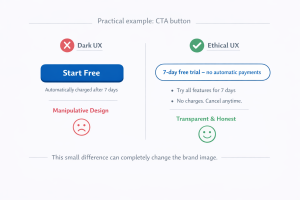
Practical example: CTA button

❌ Dark UX:

  • Big “Start Free” button
  • Small text below: “Automatically charged after 7 days”

✅ Ethical UX:

  • Clear CTA: “7-day free trial – no automatic payments”
  • Clear explanation of next steps
  • Easy cancellation

This small difference can completely change the brand image.

Why is ethical UX a competitive advantage?

In a market where users are becoming more informed every day, trust has become the main asset of brands.

Benefits of Ethical UX:

✅ Increase real conversion rates
✅ Increase user loyalty
✅ Improve SEO (reduce bounce rate)
✅ Sustainable business growth

This is why professional website and app design companies have moved towards ethical UX.

Uixpulse’s professional approach to UX design

At Uixpulse, user experience design is not just about following trends; it is a combination of:

  • User behavior analysis
  • Decision-making psychology
  • Clear business objectives
  • and UX ethics

We believe: Good UX doesn’t force the user; it convinces.

In our website and app design projects, we focus on creating an experience that is:

  • Transparent
  • Trustworthy
  • And ultimately, profitable but human.

The Future of UX: Less Deception, More Awareness

Today’s users:

  • Recognize Dark Patterns
  • Stay loyal to honest brands
  • Don’t forget bad experiences

So the future belongs to brands that choose Ethical UX.

Conclusion

Design can deceive the user;
But professional brands don’t do this.

If you’re looking to design a website or app that:

  • Not just beautiful
  • but build trust, last and grow

Ethical UX is your smart choice.

📌 Uixpulse is with you in creating human, professional, and impactful digital experiences.

Resources

  • Nielsen Norman Group – Dark Patterns
  • UX Collective – Ethical UX Design
  • Interaction Design Foundation – UX Ethics
  • Baymard Institute – User Trust & UX

Written by uixpulse.com

Scroll to Top